Understanding the Structural System Required in Florida Homes
When most people are looking for a custom home builder in Cape Coral, they’re thinking about finishes—what the home will look like when it’s done. But one of the most important parts of the structure is something you’ll never see once it’s complete.
That’s the rebar system.
In Florida, this isn’t an upgrade or an added feature. It’s part of the structural requirements that are designed to make sure homes can handle the conditions here. When it’s installed correctly, it connects the home from the foundation all the way up to the roof, allowing everything to work together as one continuous system.
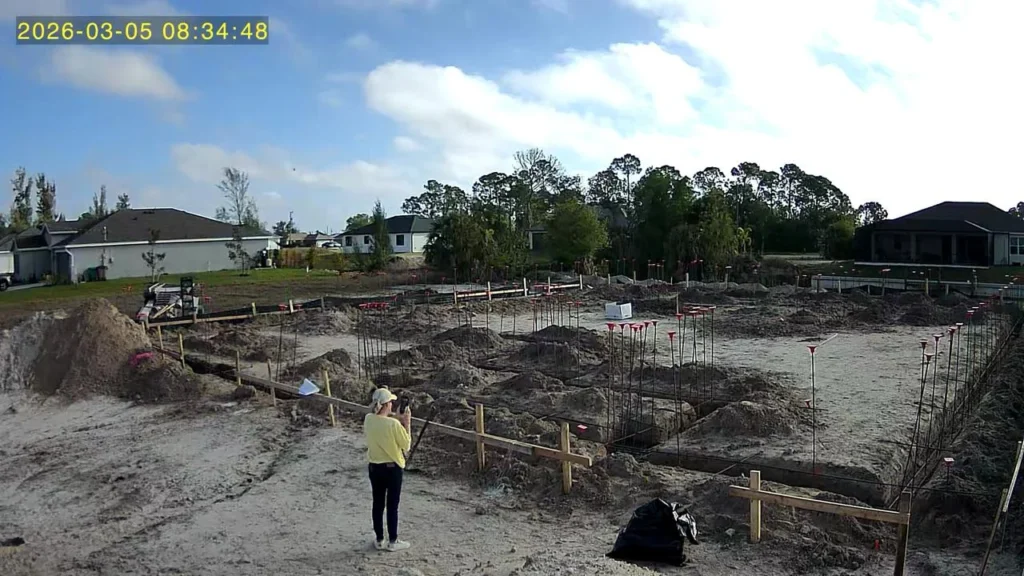
It all starts at the footer. This is the thickened portion of concrete at the base of the home, and it contains continuous horizontal rebar. That steel helps distribute the load of the structure into the ground and provides the base level of strength for the home. Just as important, it’s designed to tie directly into the vertical reinforcement above it.
From the footer, rebar continues vertically up through the stem wall, creating a connection between the foundation and the wall system. Instead of separate components stacked on top of each other, the structure begins to act as one.
As the block walls go up, you’ll typically see inspection knockouts spaced throughout the wall, often around four feet apart. These openings allow verification that the vertical steel is in place. Inside those block cells, rebar runs vertically and the cells are filled solid, locking that reinforcement into position and continuing the structural path upward.
At the top of the wall, everything ties into bond beams or tie beams, which run horizontally around the perimeter of the home. These beams connect the vertical reinforcement together, forming a continuous band that helps distribute loads and resist movement across the structure.
From there, the system continues into the roof. The bond beam or tie beam is connected to the trusses with engineered straps and connectors, tying the roof into the walls and the walls into the foundation. When it’s all complete, the home is fully connected from top to bottom.
That continuity is what allows the structure to perform the way it’s designed to—especially in Florida, where homes need to handle wind loads, moisture, and shifting conditions over time. Instead of stress building up in one area, it’s distributed through the system.
This is one of those parts of the building process that happens early and gets covered up quickly. Most homeowners never see it, but it plays a major role in how the home holds up over the years.
At Conquest Builders, our focus is making sure these systems are installed the way they’re designed and verified before they’re covered. Not because it’s above standard—but because it is the standard, and it matters.
And when it’s done right, it gives you something most people don’t think about when they walk into a finished home—confidence in what’s behind the walls.