
Why Spray Foam Insulation Is Becoming So Popular in Southwest Florida Homes
When most people think about insulation, they only think about the living space. They picture keeping the bedrooms cooler or lowering the electric bill a little bit in the summer.
But in Southwest Florida, insulation impacts far more than just comfort. It affects humidity control, HVAC longevity, attic usability, future maintenance access, and even how efficiently your entire home performs over the next 30 years.
At Conquest Builders Corp, we insulate more than just the main conditioned living areas of the home. We believe in insulating above the garage, lanai areas, and entry sections as well whenever possible because we want to create a more stable thermal envelope around the structure.
Instead of having sections of the roof system reaching extreme temperatures, we work to reduce heat transfer across the home as a whole.
Why Traditional Batt Insulation Struggles in Florida
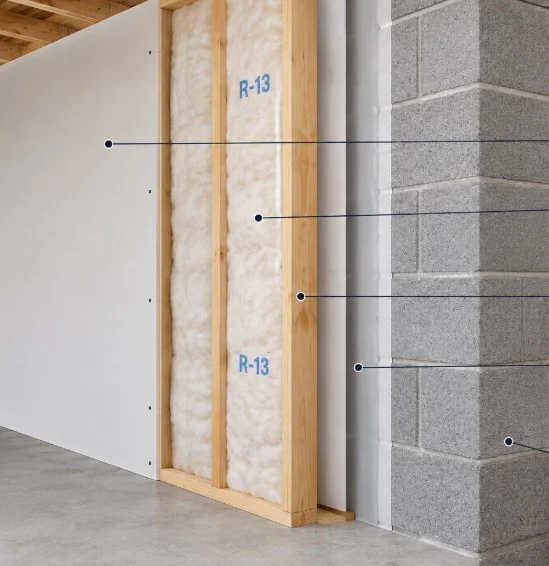
Traditional batt insulation is typically installed on top of the ceiling drywall. The problem is that this leaves the attic itself exposed to brutal Florida heat.
It’s not uncommon for attics in Cape Coral, Fort Myers, and throughout Southwest Florida to exceed 130–140 degrees during the summer months.
That extreme heat doesn’t just sit there harmlessly. It radiates into ductwork, stresses HVAC systems, increases humidity loads, and makes attic spaces nearly unusable.
How Spray Foam Insulation Changes the Entire Attic Environment
Spray foam insulation changes that completely.
By insulating the underside of the roof deck instead of only the ceiling plane, the attic itself becomes dramatically cooler and more controlled.
Instead of entering an oven-like attic, you walk into a space that is much closer to indoor temperatures.
That matters for several reasons.
Protecting the HVAC System
One of the biggest advantages is protecting the HVAC system itself.
In many Florida homes, the air handler and ductwork are located in the attic. When that attic is 140 degrees with high humidity, your HVAC system is constantly fighting an uphill battle.
The equipment runs hotter, the ductwork absorbs more heat, and the system has to work harder just to deliver cool air to the home.
With spray foam insulation, we’re intentionally creating a lower humidity, climate-controlled environment around the mechanical system.
That helps remove the extreme dew point conditions surrounding the equipment. Lower humidity and lower ambient attic temperatures can help improve the long-term longevity of the air handler and HVAC components because the system is no longer operating in such harsh conditions day after day.
Cooler Ductwork Means Better Efficiency
The ductwork benefits as well.
If cold air is traveling through ductwork sitting inside a 140-degree attic, the ducts naturally absorb heat along the way. Even insulated ducts are still fighting enormous temperature differences.
When the attic itself stays dramatically cooler, the ductwork stays cooler too.
That means the HVAC system operates more efficiently and loses less conditioned air before it even reaches the rooms below.
Reducing the Risk of Mold Growth
And that leads us to, quite possibly, one of the biggest improvements from the system — the risk of mold growth is much lower.
The decreased moisture buildup from the less extreme temperature differences inside the HVAC system and outside the system means significantly less mold growth.
Traditionally insulated homes often struggle with mold growth around plenums, registers, and inside the air handler itself.
A Much More Usable Attic Space
Another huge benefit people don’t think about is attic usability.
Most homeowners eventually want to store holiday decorations, keepsakes, paperwork, or seasonal items in the attic.
In a traditional vented attic with batt insulation, the space becomes brutally hot for much of the year.
With spray foam insulation, the attic becomes substantially more practical for storage because temperatures are far more controlled.
Making Future Maintenance Easier
It also makes future maintenance and upgrades easier.
Anyone who has ever worked in a traditional blown-in or batt insulated attic knows how miserable it can be.
You crawl through loose insulation, get covered in fiberglass, struggle to find trusses, and often can’t even clearly see the drywall below you.
Future trades working on low voltage wiring, speakers, security systems, lighting, plumbing modifications, or mechanical changes all benefit from a cleaner attic environment.
With spray foam applied to the roof deck, the trusses remain visible and accessible. The drywall ceiling plane remains easier to identify.
Technicians can move around the attic more efficiently without digging through layers of insulation or covering themselves in fiberglass.
That makes future modifications to the home cleaner, faster, and often less expensive.
What About the Cost?
Of course, one of the biggest questions homeowners ask is cost.
As a simple example, let’s say upgrading to spray foam insulation costs approximately $7,000 more than a traditional batt insulation package.
At first glance, that can sound significant.
But when you spread that cost over a 30-year mortgage at roughly 5% interest, the additional payment is only about $38 per month.
Meanwhile, it’s very common for homeowners to see monthly energy savings that rival or exceed that increase depending on home size, usage habits, thermostat settings, and overall efficiency of the structure.
In many cases, the reduction in electric costs can offset a substantial portion of the added mortgage payment while simultaneously giving the homeowner:
- A more comfortable home
- Better humidity control
- Improved HVAC conditions
- A dramatically more usable attic space
- Improved long-term efficiency
A Better Building Experience, Guaranteed
For us, this goes back to our core philosophy: a better building experience, guaranteed.
Sometimes the best decisions in construction are the ones you don’t immediately see when you walk through the front door.
They’re the systems behind the walls and above the ceilings that quietly improve comfort, efficiency, durability, and long-term ownership experience for decades to come.